Solitaire Word Match
- 4.9
- Rating
- 100.00K
- Installs
- Free
- Price
 Analysis by App-foxy
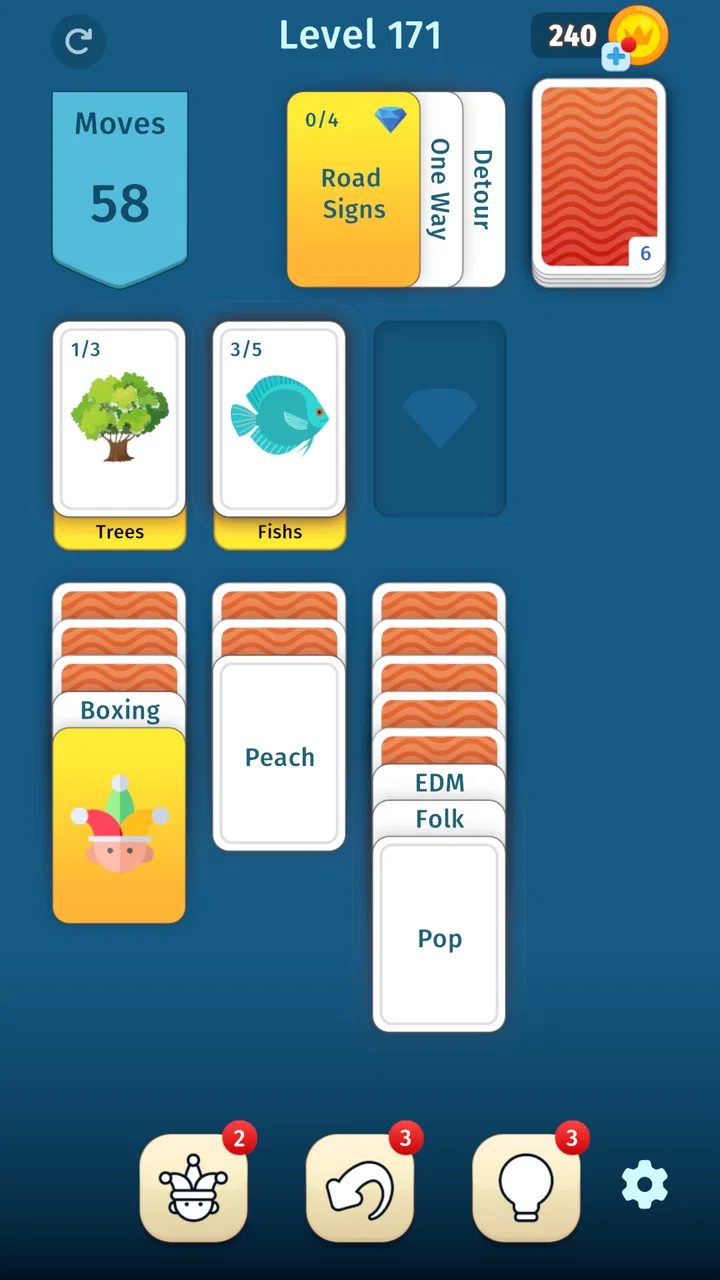
I went into Solitaire Word Match expecting a familiar card game with a small word-game twist, but the combination changes how I judge each move. It is not simply a traditional solitaire session with words placed on top. The word-puzzle element gives me another reason to think before clearing cards, while the solitaire structure keeps the game easy to understand from the first round.
That makes it an interesting choice for people who want a quiet, lightweight word game rather than a competitive vocabulary challenge. It is free to start, suitable for Everyone, and made by One Way Street. The game has also attracted a 4.9 average from around six thousand ratings and passed one hundred thousand installs, which suggests that its straightforward idea has found a receptive audience.
My recommendation depends on what you want from a mobile game. If you enjoy solitaire but sometimes find ordinary card layouts too repetitive, this is worth trying. If you want a deep word-learning tool, a large social community, or a pure card game with no extra layer, I would look at other types of apps instead.
You May Also Like

 Blood Strike: 2.5 Anniversary
Blood Strike’s Loadouts Turn Every Drop Into a Tactical Gamble
A close look at Blood Strike’s custom loadouts: how fast access to signature weapons reshapes its battle royale rhythm, rewards preparation, and narrows the gap between fights.

 Pandora - Music & Podcasts
Pandora’s Music Is Easy to Start, but Harder to Recover
Pandora’s strength is its low-effort path from a seed to a station. Its weak spot is how much confidence it asks you to place in connection, setup, and quiet recovery.

 8 Ball Pool
 Is Built on Rivalries, Rematches, and Routine
A close look at the rivalries, rematches, shared routines, and unanswered safety questions that turn a quick pool match into a persistent mobile community.

 Samsung Music
’s Quiet Strength Is Playing What You Already Own
Its reach comes less from spectacle than from dependable access to a personal library. That simplicity is both the app’s strongest retention engine and its ceiling.

 AccuWeather: Weather Radar
AccuWeather Review: A Quick, Clear Forecast for Everyday Decisions
For everyday plans, the best forecast is the one you can understand quickly. AccuWeather makes rain timing, radar, and local conditions easy to act on, with a few trade-offs.

 Hill Climb Racing
Why Hill Climb Racing Still Turns Crashes Into One More Run
A tiny car, a bumpy hill and one more upgrade: Hill Climb Racing keeps resurfacing because its simple chaos makes every near-miss feel personal.
More From Our News Desk



How I Decide Whether Solitaire Word Match Fits
I use this section to focus on the practical fit: whether the mix of cards and words suits the kind of attention I want to give a game, rather than whether its premise sounds clever at first. I also consider how a free starting point and optional purchases affect the decision to keep playing. From there, the next section looks at how that appeal holds up beyond the first few sessions.
The first question is whether the two genres work together for you
The most important decision is not the rating or the download size. It is whether you like switching between visual planning and language-based thinking. Solitaire normally asks me to watch card order, preserve useful moves, and avoid blocking the layout. A word puzzle asks me to recognize combinations and make choices from letters. Here, those habits meet in the same short session.
That blend makes the game feel more active than ordinary solitaire without turning it into an intense action title. I can play at a relaxed pace, inspect the available choices, and decide whether a move helps the current card arrangement or only looks attractive in isolation. The best approach is to treat every word opportunity as part of the larger layout rather than chasing the quickest possible match.
For a player choosing between this and a standard word game, the key trade-off is variety versus purity. A dedicated word game will usually keep vocabulary at the center of every moment. This title divides attention between words and cards. That can make it more approachable for someone who likes word puzzles but does not want a demanding vocabulary workout, though it may feel less satisfying to a player who wants every move to test spelling or word knowledge.
The short-session test matters more than the feature list
I found the format most appealing when I had a few spare minutes and wanted something more engaging than scrolling. It suits the moments when I can concentrate briefly but do not want to commit to a long story, a multiplayer match, or a complicated strategy game. The solitaire foundation is familiar enough that I do not need a tutorial-heavy learning period before making useful decisions.
A realistic use case is a short break between errands. I can open a round, focus on arranging the available cards and forming words, then stop when my break ends. That is a better fit than a game that penalizes interruption or expects constant attention. The word layer also helps prevent the session from becoming completely automatic, because I still need to notice possible combinations instead of moving cards by habit.
There is a small mental cost to that convenience. If I am tired, I may want solitaire to be almost meditative, while the word element asks me to stay mentally present. Players looking for a completely passive card experience may prefer a conventional solitaire app. This one is better when I want calm concentration, not when I want to play on autopilot.
What the audience numbers tell me—and what they do not
The game is listed as free, with optional in-app purchases ranging from $1.99 to $99.99 per item. That makes the initial decision easy: I can try the core experience without paying first. The important practical question is whether I am comfortable treating purchases as optional rather than assuming I will need them to enjoy the game.
Its Everyone content rating also makes it a reasonable choice for a broad household audience. I would still make purchase decisions carefully on any device shared with family members, but the age classification itself does not position the game as a mature or niche experience.
The current version is 1.2.2, and it supports devices running Android 7.0 or later. That is useful for anyone using an older Android phone, although I would still check the device’s available storage and operating condition before installing any game. The basic compatibility is broad enough that the title is not aimed only at people with recent hardware.
Where the game wins against ordinary solitaire
The strongest advantage is the extra decision layer. In a regular solitaire game, I can sometimes fall into a predictable rhythm: reveal a card, move a stack, and continue until the layout is blocked. The word-puzzle component interrupts that rhythm. It gives me another way to evaluate the board and makes a familiar card structure feel less mechanical.
I also like the way this combination can appeal to two different moods. When I want card-game familiarity, the solitaire foundation gives me a comfortable entry point. When I want a little more mental stimulation, the word side gives the round a purpose beyond simply clearing the tableau. That flexibility is the main reason I would recommend it over a plain solitaire app to a friend who is already bored with standard layouts.
Another less obvious strength is that the game can encourage deliberate play without requiring a complicated strategy guide. I do not need to memorize a large rulebook. Instead, I can improve by slowing down, checking what a word move exposes, and considering whether a card should be used now or saved for a later sequence. That kind of improvement feels natural rather than academic.
Three habits that make the hybrid format easier
My first useful habit is to avoid treating the most obvious word as automatically correct. A quick match may clear something immediately, but the better choice can be the one that reveals a more useful card or preserves flexibility elsewhere. I look at the surrounding layout before committing, especially when two possible moves seem equally appealing.
My second habit is to separate discovery from commitment. I scan the available letters and cards first, then decide which move supports the board. This prevents me from making the first attractive combination I notice and only afterward realizing that it has closed off a more productive route. It is a simple change, but it makes the game feel more strategic.
My third tip is to use short sessions as practice rather than judging the game after one round. The hybrid design takes a little time to understand because I am learning how the card arrangement and word choices influence each other. After several sessions, I became better at looking for moves that serve both parts of the puzzle instead of treating them as separate mini-games.
Where other categories may fit better
A normal solitaire game is the better choice if your priority is a familiar card layout with minimal mental switching. It may feel smoother when you want to relax, follow a known rhythm, or focus only on arranging cards. Solitaire Word Match adds interest, but that added interest is also a source of friction for someone who prefers the traditional format exactly as it is.
A dedicated word game is a stronger alternative for players who care most about vocabulary, spelling practice, or word discovery. In that category, the entire interface and progression can be built around language. Here, words share attention with solitaire, so I would not choose it as my only tool for serious language study.
A competitive word title may suit you better if you need head-to-head play, rankings, or a strong social reason to return. I would also look elsewhere if your ideal game is a long-form strategy experience with layered progression. This title’s appeal is its compact combination, not a promise of a large strategic world.
There is also a difference in emotional pace. Word-and-card play is calmer than many action games, but it still asks me to make choices. Someone who wants a completely hands-off pastime may find even this gentle level of attention too much. Conversely, someone who wants constant novelty and fast reactions may find it too restrained.
The cost of switching from a familiar game
Moving from ordinary solitaire to this game should be relatively easy because the card foundation gives me an immediate point of reference. I do not have to abandon everything I already understand. The adjustment is mainly learning when the word opportunity should influence my card decision and when a visually appealing move is actually a poor long-term choice.
The switch from a pure word game is different. A player accustomed to focusing only on letters may initially overlook the importance of card order and available space. I would approach the change by playing slowly at first, checking the layout before forming a word, and resisting the urge to judge a round only by how quickly I find combinations.
There is no need to pay simply to evaluate the concept because the game is free to begin. Still, the listed purchase range means I would decide in advance whether I am willing to spend anything. My own approach would be to use the free experience long enough to determine whether the card-and-word relationship genuinely improves my sessions. If it does not, buying extras would not solve the underlying mismatch.
The practical cost is mostly attention. If I replace a familiar solitaire app, I gain a new layer of thought but may lose some of the effortless comfort of the old routine. If I replace a dedicated word game, I gain card-based variety but give up some focus on language. Thinking about that exchange before switching helps avoid expecting this game to behave like something it is not.
Who should try it first
I would point this game toward casual players who already enjoy solitaire and want a reason to examine each move more carefully. It is also a good match for people who like word puzzles but prefer a gentler setting than a timed or competitive challenge. The Everyone rating and free entry make it easy to suggest as a low-risk experiment for a broad audience.
It may work especially well for someone who keeps several small games on a phone for different moods. This can fill the space between a basic card game and a dedicated word puzzle: familiar enough to start quickly, but varied enough to avoid feeling like a completely automatic routine. The best results come when the player enjoys thoughtful choices rather than chasing speed.
I would skip it if I want a pure solitaire simulator, a structured vocabulary course, or a multiplayer competition. I would also skip it if optional purchases make me uncomfortable regardless of whether the free play is enjoyable. The game’s central idea is specific, and its strengths do not compensate for disliking either half of the combination.
My recommendation after using it
Solitaire Word Match is worth trying when you want solitaire with a genuine word-puzzle decision layer. I like that it does not require me to learn an elaborate system before I can enjoy a round, yet it gives me more to consider than a standard card layout. The most satisfying sessions are the ones where I slow down, compare possible word moves, and think about what each choice does to the cards still waiting to be used.
One Way Street has chosen a focused concept rather than trying to serve every kind of mobile player. That focus is a benefit when the combination matches your taste, but it also makes the limitations clear. This is not the app I would recommend for serious word study, competitive play, or completely passive relaxation. For those needs, a specialized alternative will probably be better.
For everyone else, the free starting point makes the decision straightforward. Install it, play several short rounds, and notice whether the word element makes solitaire more interesting or simply interrupts the flow you already enjoy. If it adds the right amount of thought, the game deserves a place in a casual rotation. If you keep wishing the words or the cards would disappear, that is a clear sign to choose a more focused alternative instead.
FAQs for Solitaire Word Match
01What is Solitaire Word Match?
Solitaire Word Match is an engaging mobile game that combines the classic mechanics of solitaire with word puzzle elements. Players must strategically match words to progress through cards, making it a perfect blend of mental challenge and traditional gameplay. Available for both Android and iOS, it offers hours of entertainment for word game enthusiasts.
02How does the game mechanics work in Solitaire Word Match?
In Solitaire Word Match, players draw cards with letters and must create valid words to clear the deck. The game challenges users to think strategically about word formation while adhering to the rules of solitaire. This unique combination enhances cognitive skills and provides a fresh twist to standard card games.
03Is Solitaire Word Match free to download and play?
Yes, Solitaire Word Match is free to download on both Android and iOS platforms. While the core game is free, it does offer in-app purchases for additional hints, themes, and customization options. These purchases are optional and not necessary for progressing through the game.
04Does Solitaire Word Match require an internet connection?
No, Solitaire Word Match does not require an internet connection for basic gameplay. This makes it an excellent choice for playing on-the-go or in areas with limited connectivity. However, some features like leaderboards and updates might require occasional online access.
05Are there any age restrictions for Solitaire Word Match?
Solitaire Word Match is designed for players of all ages, though it is most suitable for those who enjoy word puzzles and card games. The game features family-friendly content, making it a great option for both adults and children who want to improve their vocabulary and strategic thinking skills.
Pros
- Engaging mix of solitaire and word puzzles.
- Intuitive interface for easy navigation.
- Offline play available for uninterrupted fun.
- Daily challenges keep gameplay fresh.
- Suitable for all ages with adjustable difficulty.
Cons
- In-app ads can be intrusive at times.
- Limited hints available without purchases.
- Requires frequent updates for new content.
- Some levels may feel repetitive.
- No multiplayer mode for competitive play.

Solitaire Word Match
Gallery